Decoding the Sanskrit Names of Yoga Asanas
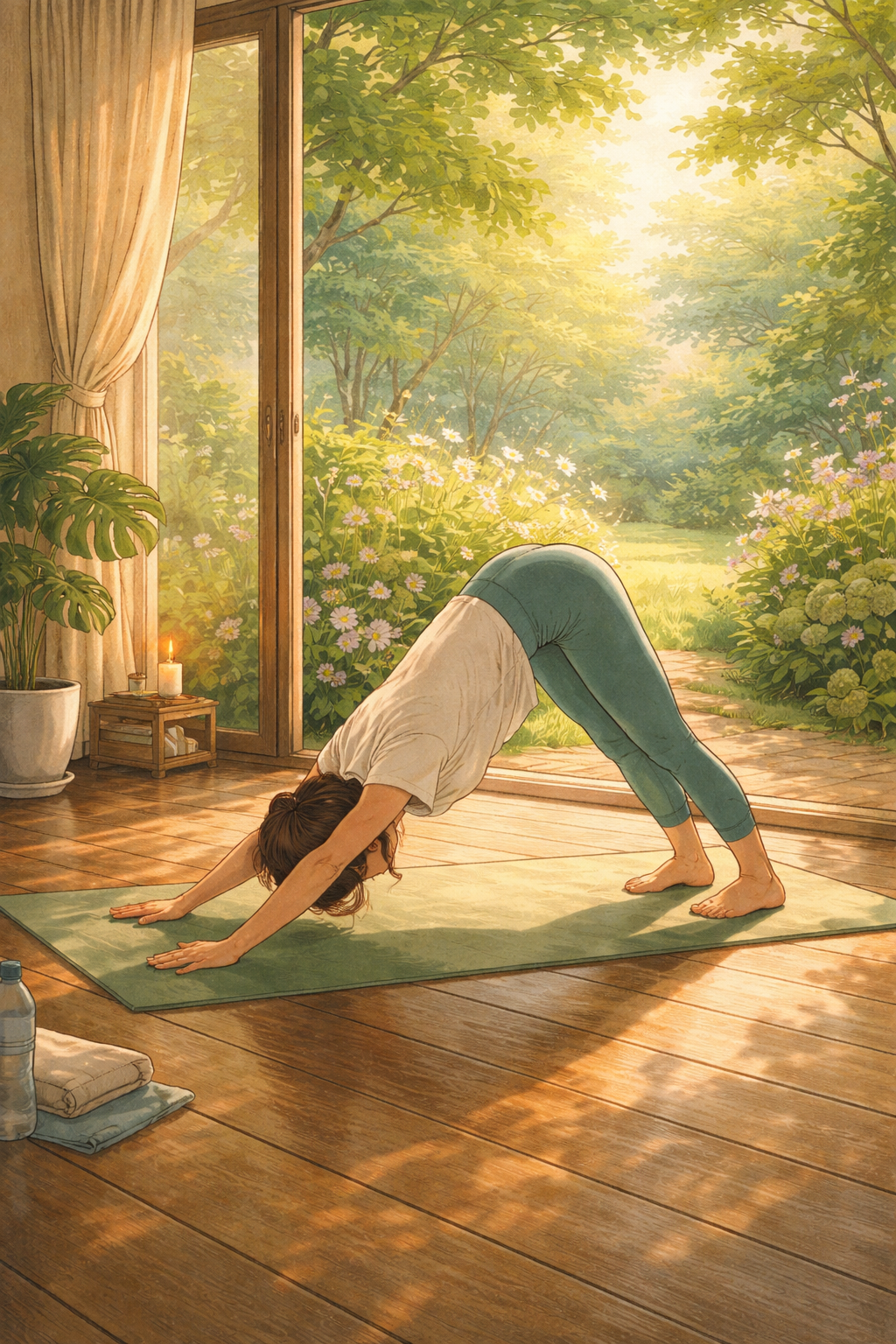
The teacher says “Parivrtta Ardha Chandrasana” and the room hesitates. A few people look around to see what everyone else is doing. The name lands as a long stretch of unfamiliar syllables, something to be copied rather than understood.
However, these names are not arbitrary labels. They are descriptions, and often instructions. Parivrtta means revolved. Ardha means half. Chandra means moon. Asana means pose. Put them back together and you have Revolved Half Moon Pose — which is precisely what the body is being asked to do. In this article, we will take these names apart word by word, look at the vocabulary they are built from, and work through a series of examples until the longest of them becomes readable.
Asana: the word at the end
Asana comes from the Sanskrit root as, meaning to sit or to be seated. In Patanjali’s Yoga Sutras, asana is the third of the eight limbs, and it is described simply as a stable and comfortable seat — a position the body can hold long enough for the mind to settle. The hundreds of physical postures we practise today came much later, through Hatha yoga, but they kept the word.
Every posture name ends in -asana. What makes the names look like one long unbroken word is a rule of Sanskrit called sandhi — sounds that meet at a word boundary merge. Tada (mountain) plus asana becomes Tadasana. Chandra (moon) plus asana becomes Chandrasana. Once you expect that fusion at the end, the rest of the name separates much more easily.
The building blocks
Most pose names are assembled from a surprisingly small pool of words. Around forty of them will carry you through an ordinary class.
Direction and orientation:
- adho — downward
- urdhva — upward
- utthita — extended
- supta — reclining
- parivrtta — revolved, twisted
- parsva — side, flank
- ardha — half
- baddha — bound
- salamba — supported (and niralamba, unsupported)
- prasarita — spread wide
- upavistha — seated
- ut- / uttana — intense, stretched out
Numbers:
- eka — one
- dvi — two
- tri — three
- chatur — four
- ashta — eight
The body:
- hasta — hand
- pada — foot or leg
- angustha — big toe
- mukha — face
- janu — knee
- sirsa — head
- bhuja — arm
- karna — ear
- kona — angle
- danda — staff
- paschima — west
- purva — east
Those last two need a word of explanation. Yoga was traditionally practised facing the rising sun, so the front of the body is the east and the back of the body is the west. This is why Paschimottanasana — the seated forward bend — is literally an intense stretch of the west, meaning the whole back line of the body.
Animals and nature:
- svana — dog
- bhujanga — serpent, cobra
- kurma — tortoise
- kapota — pigeon
- matsya — fish
- ushtra — camel
- garuda — eagle
- vrksa — tree
- padma — lotus
- chandra — moon
- surya — sun
- tada — mountain
- setu — bridge
- sava — corpse
Sages, gods and heroes: a smaller group of names points to a person rather than a shape — Virabhadra (a fierce warrior created by Shiva), Marichi, Matsyendra (the lord of the fishes), Hanuman, Vasistha, Bharadvaja. These names carry a story instead of a description, so they cannot be decoded the same way. Gomukhasana sits in between: go is cow and mukha is face, and the pose is named for the shape the crossed legs make.
Reading a name, word by word
Tadasana
- tada = mountain
- asana = pose
Translation: Mountain Pose.
The simplest possible name — one word and the suffix. Standing still, upright, rooted.
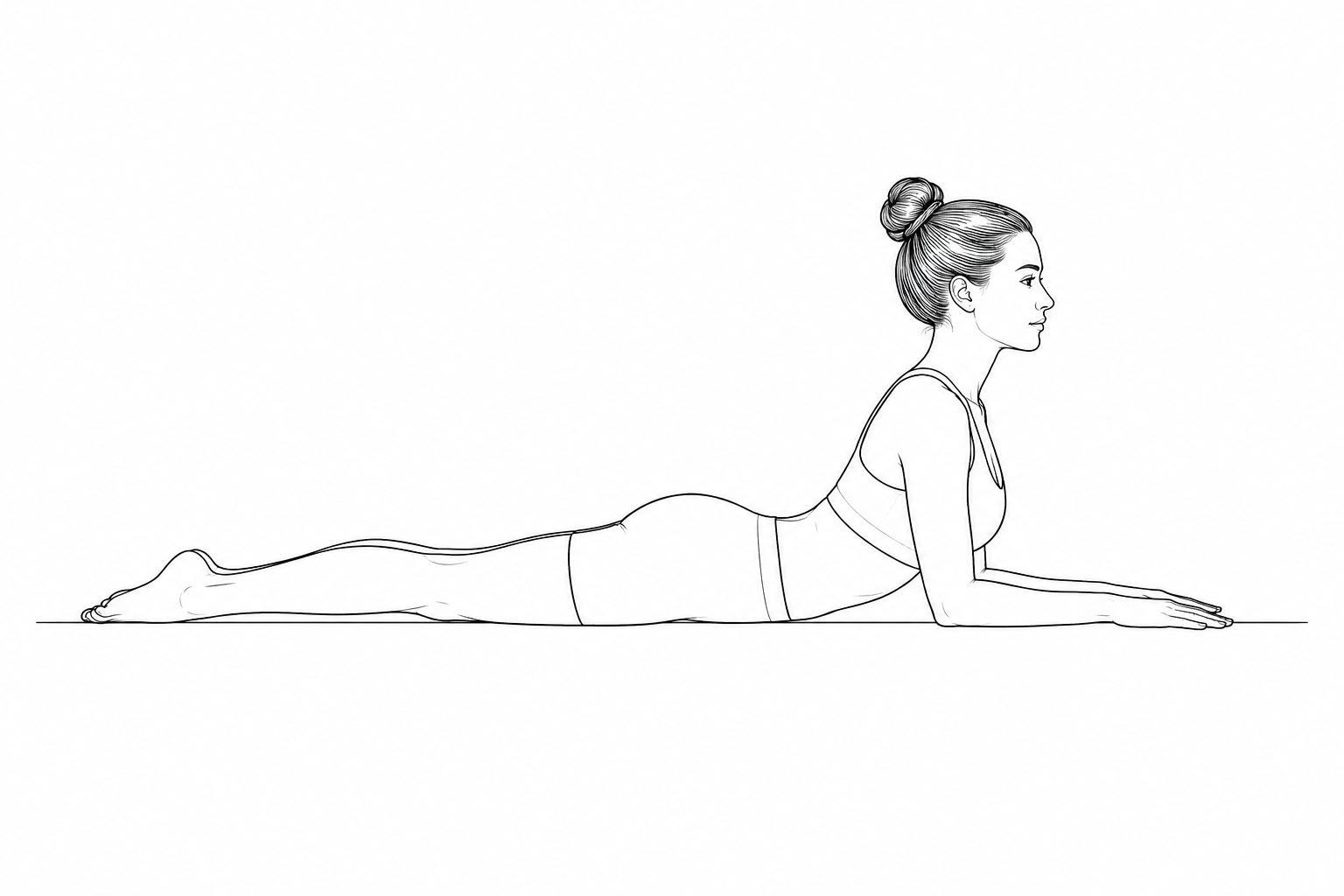
Salamba Bhujangasana
- sa = with
- alamba = support
- bhujanga = serpent, cobra
- asana = pose
Translation: Supported Cobra Pose, known in class as Sphinx.
Salamba is one of the most useful words to recognise, because it tells you the shape is being held up by something — here the forearms on the floor. The same prefix appears in Salamba Sarvangasana, supported shoulderstand.
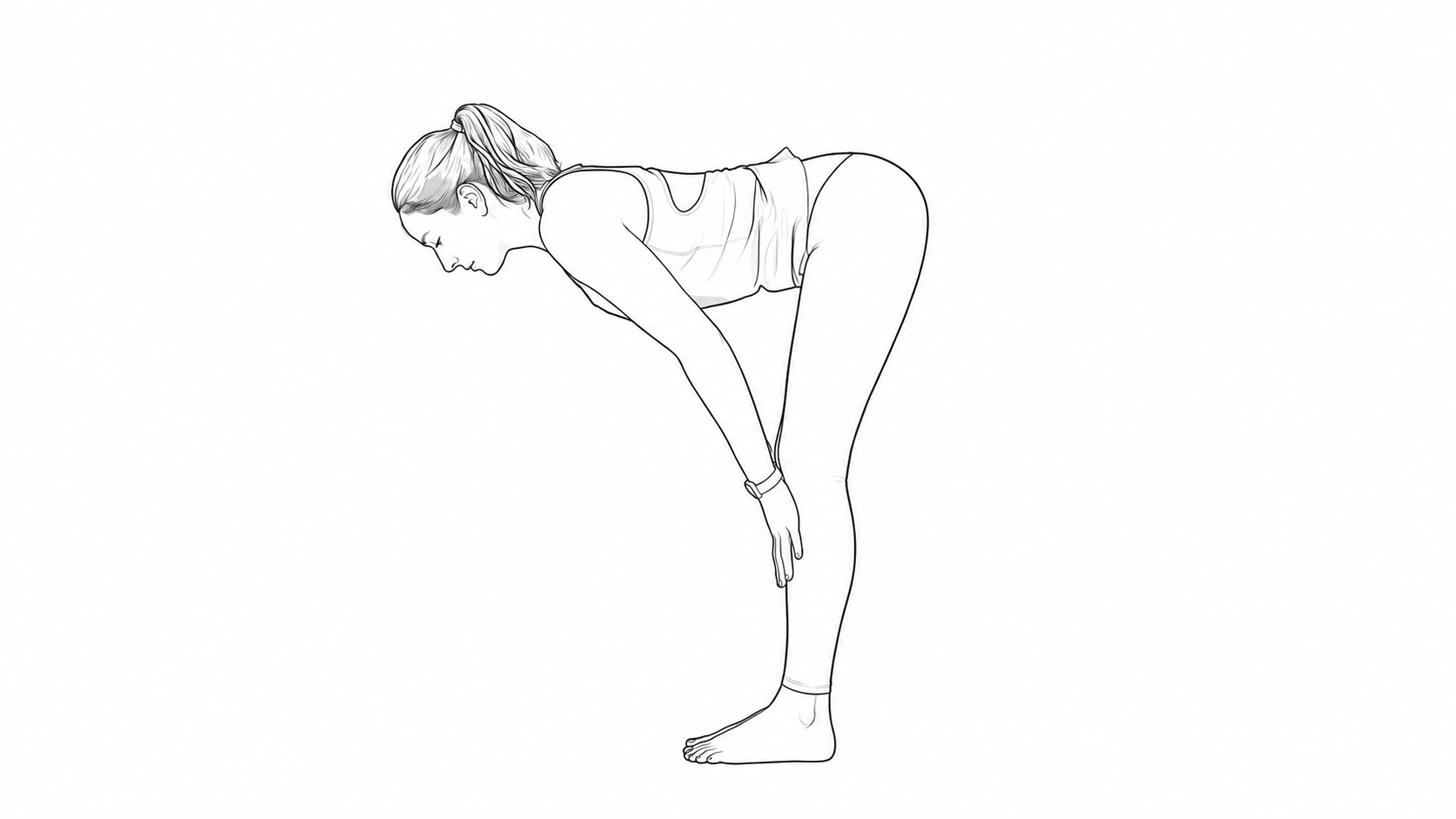
Ardha Uttanasana
- ardha = half
- ut = intense
- tan = to stretch
- asana = pose
Translation: Half Intense Stretch Pose, usually called Half Forward Bend.
Uttanasana is the full standing forward bend. Add ardha and you have the halfway version, spine long and hands at the shins.
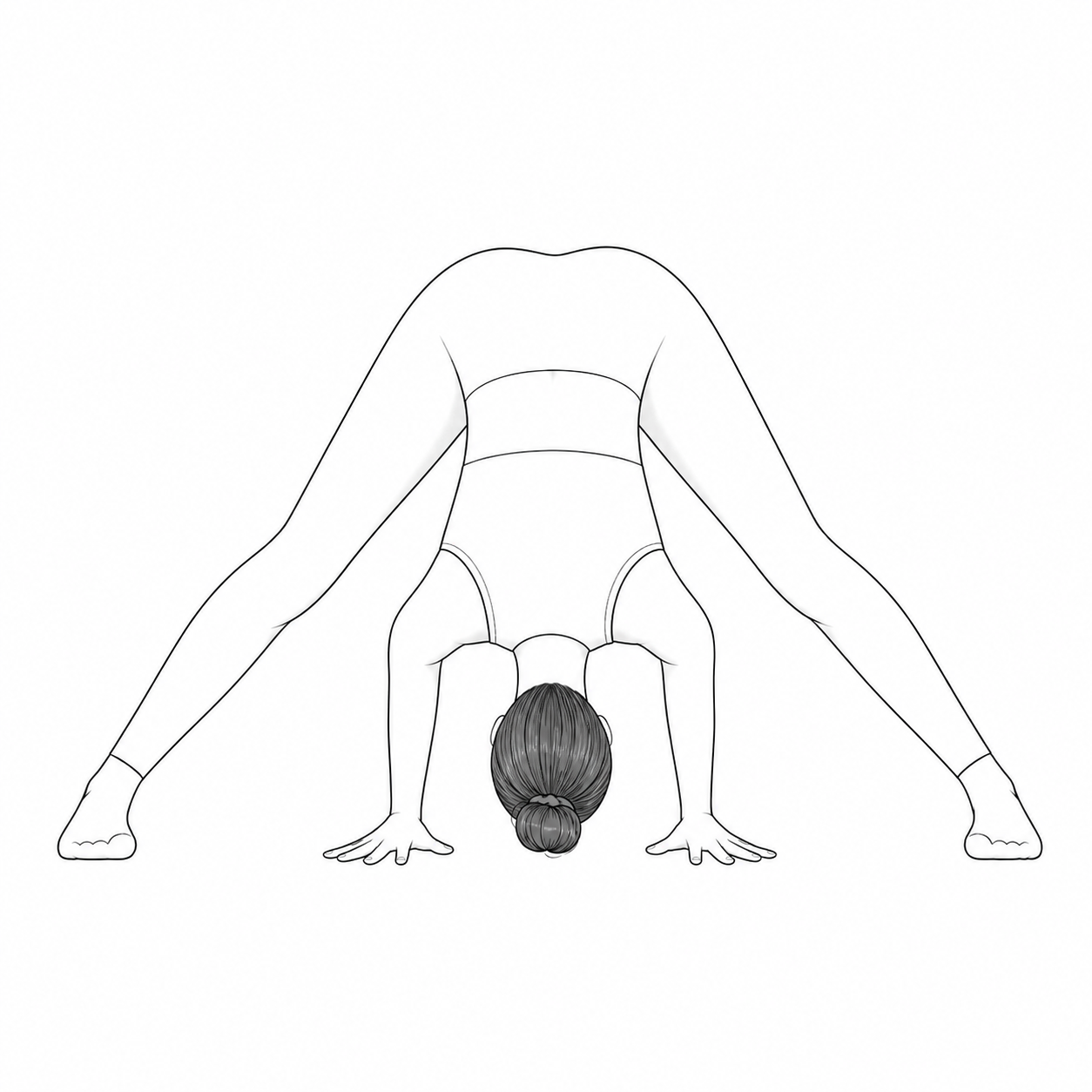
Prasarita Padottanasana
- prasarita = spread wide
- pada = foot
- ut = intense
- tan = to stretch
- asana = pose
Translation: Wide-Legged Intense Stretch Pose.
Notice how pada and uttanasana have merged into padottanasana — the same sandhi rule at work in the middle of the name rather than at the end.
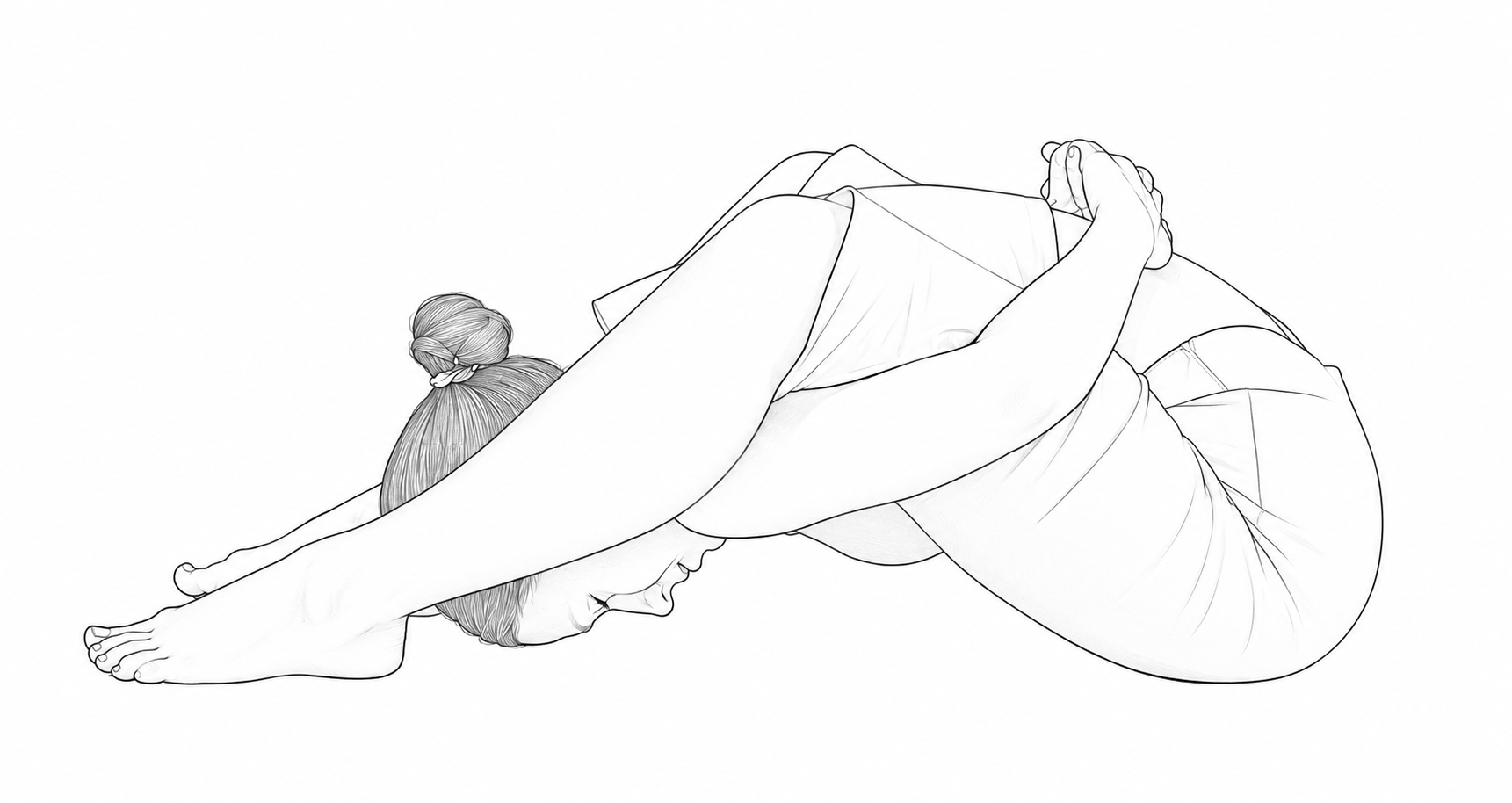
Supta Kurmasana
- supta = reclining, sleeping
- kurma = tortoise
- asana = pose
Translation: Sleeping Tortoise Pose.
Supta appears constantly, and it is a reliable signal that you will be on your back or your front rather than standing: Supta Baddha Konasana, Supta Padangusthasana, Supta Virasana.
Parivrtta Ardha Chandrasana
- parivrtta = revolved
- ardha = half
- chandra = moon
- asana = pose
Translation: Revolved Half Moon Pose.
Three modifiers, and each one changes the shape. Chandrasana gives the crescent. Ardha makes it the half moon balanced on one leg. Parivrtta turns the whole thing, bringing the opposite hand to the floor and the chest toward the ceiling.
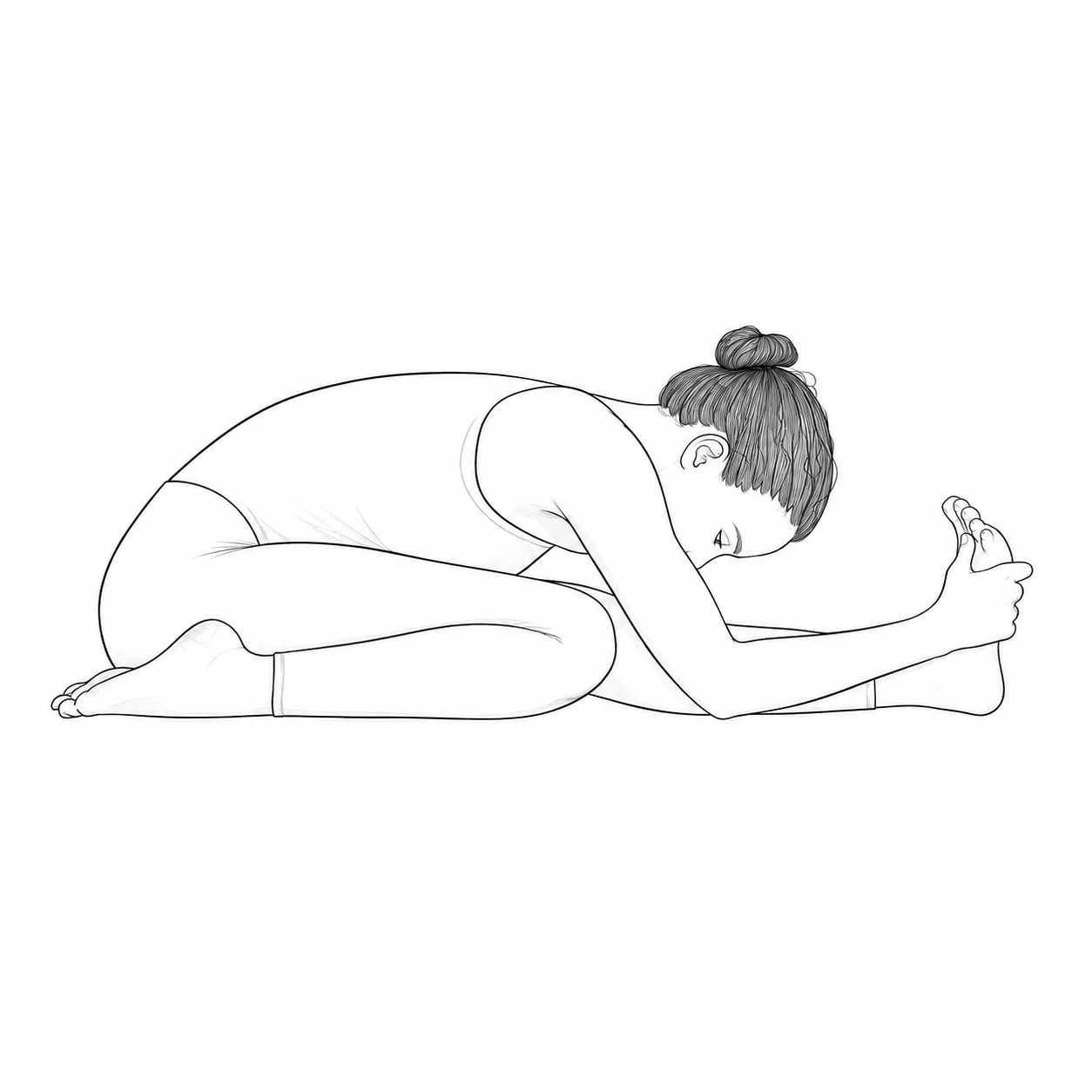
Triang Mukha Eka Pada Paschimottanasana
- tri = three
- anga = limb
- mukha = face
- eka = one
- pada = leg
- paschima = west, the back of the body
- uttana = intense stretch
- asana = pose
Translation: Three-Limbs-Facing One-Legged Intense West Stretch Pose.
Five words and a suffix, and nothing in it is new. Three limbs — foot, knee and thigh — face backward while the other leg extends forward into a one-legged forward bend.
The order of the words
The words are not stacked at random. They follow a fairly consistent order, working from the outermost qualifier inward to the shape itself:
- Variation or rotation — ardha, parivrtta, utthita, supta, prasarita
- Support or bind — salamba, baddha
- Number and body part — eka pada, dvi pada, hasta, janu, sirsa
- The subject — chandra, kapota, svana, kona
- asana
This is why the names can be read from left to right, like a sentence that narrows as it goes. Utthita Hasta Padangusthasana: extended, hand, big toe, pose. Eka Pada Rajakapotasana: one, leg, king, pigeon, pose. Once the pattern is familiar, an unfamiliar name is rarely a wall.
A note on pronunciation
A rough guide, offered as a practitioner rather than a Sanskrit scholar. Vowel length matters: the short a sounds like the a in “about”, while the long ā sounds like the a in “father” — so asana is closer to AH-sa-na than to a-SAH-na. The th in Uttanasana or hatha is an aspirated t, never the English “th” of “the”. And ch in chandra is the ch of “church”.
If you want to hear it properly, listen to a teacher who has studied the language and copy them. Reading it off a page will only get you so far.
Conclusion
The vocabulary is small and it repeats. Learn ardha, supta, parivrtta, eka pada and a dozen animals, and most of what a teacher says stops being a foreign sound to imitate and becomes something closer to an instruction — revolved, half, moon. That shift is worth the small effort of learning the words, because it changes what you are able to hear in class.
For the broader vocabulary of yoga beyond the postures, there is the glossary of yoga terms. For the poses themselves, the backbend and forward bend articles list each one with its Sanskrit name — good places to practise reading them.